
Bees
Twenty species, approximately 5% of the Indiana bee fauna, representing all five common bee families in Indiana were collected during the survey. Bees were collected using passive (bowl trapping) and active (netting at flowers) sampling techniques. Three areas were sampled, Pogue’s Run, Fall Creek, and Pleasant Run. Each area was sampled with a single transect of 30 bowls (ten white, ten fluorescent blue, and ten fluorescent yellow) for a total of 90 bowls across the Indianapolis Urban Bioblitz focal area. Bowls were separated by 5 m along each transect. Approximately 10 hours of net collecting was performed by the team on several flowering species at Pleasant Run. Net collections were not performed at Pogue’s Run and Fall Creek due to the lack of floral availability. Overall floral diversity was very low and bee activity was modest.
 Sweat bees in the family Halictidae represented a large portion of the species richness (10 spp.) and much of the bee abundance (41%). Only two bumble bee species were collected, Bombus impatiens and B. griseocollis, with the former being much more common and the latter represented by a single specimen. In general, most of the bees encountered were common species and expected in collections throughout the state. Interesting species include Lasioglossum anomalum, which is very small sweat bee often associated with prairies and grasslands and Lasioglossum platyparium, a cuckoo bee that parasitizes other bees. Only one non-native species, the European honey bee (Apis mellifera) was collected and it was the most common bee encountered, representing over 18% of total specimens. However, with only one introduced species (5% of total species collected), Indianapolis seems to have a relatively intact native bee fauna.
These collections provide baseline data of the bee species richness and relative abundance and demonstrate the importance of corridors for bee conservation and habitat. Further management to increase native wildflower diversity and reduce invasive plant species will likely enhance bee populations and thus local pollination and ecological services. Collections in these areas earlier in the year would likely add many species since solitary bees are highly seasonal and some social bee species are only active until mid-late August. Voucher specimens are housed in the Environmental Solutions & Innovations, Inc. (ESI) entomology collection in Indianapolis.
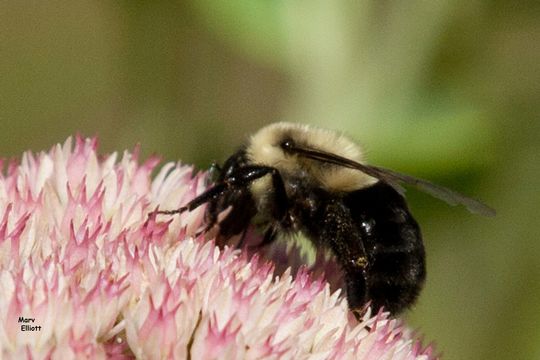
Common Eastern Bumble Bee
Bombus impatiens
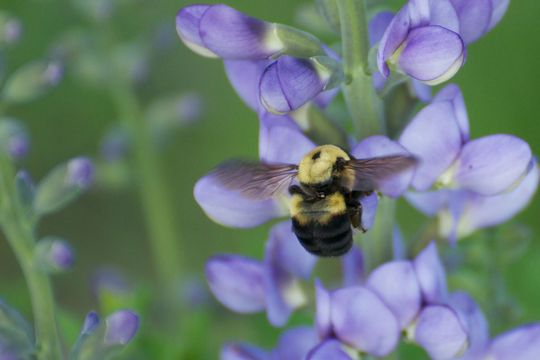
Prairie Bumblebee
Bombus griseocollis